
King Tutankhamun isn’t looking so hot these days.
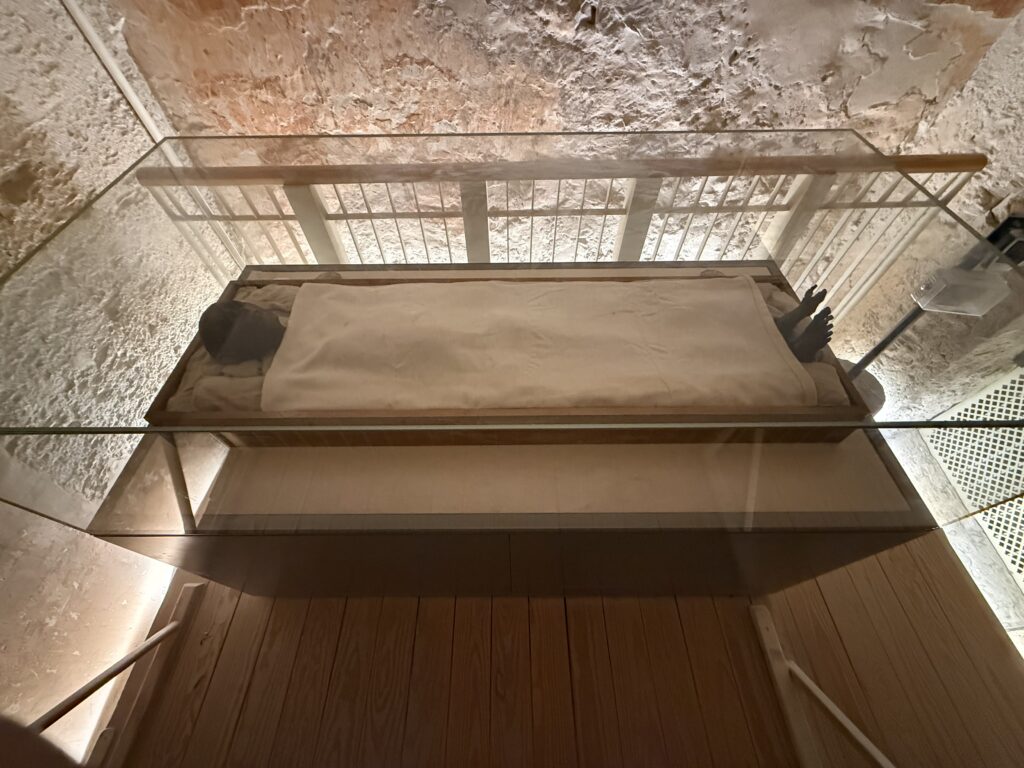
His shrunken face looks emaciated and his bony feet stick out from under a linen cloth that covers his blackened body.
Which is understandable considering that the Boy King is more than 3,000 years old.
My wife Pat and I got a close-up look at King Tut’s glass-encased mummy during a recent visit to Egypt. It lies in its original resting place in the Valley of the Kings near Luxor where more than 60 pharaohs and other nobles are buried in rock-cut tombs.
King Tut’s tomb has fascinated the world ever since it was discovered by British archeologist Howard Carter in 1922. What made it so unusual was that it was found virtually intact with more than 5,000 artifacts that are now on display at the new Grand Egyptian Museum. It’s actually a surprisingly small tomb for a pharaoh, probably because King Tut died at 18 or 19 before a larger, elaborate burial chamber could be completed.
We saw lots of tombs, temples and other ancient relics during our 10-day trip to Egypt, which included three days in Cairo and a week-long cruise on the Nile River. I also rode a camel next to the Great Pyramids of Giza, and together we took a balloon ride over the Sahara Desert, enjoyed high tea at the opulent hotel where Agatha Christie wrote “Death on the Nile’’ and futilely tried to ward off the hordes of shark-like street vendors who lure tourists by shouting “One dollah! One dollah!”
We started in Cairo, a teeming, congested metropolis with more than 23 million people and some of the ugliest buildings I’ve ever seen not built by Donald Trump. The city is crammed with decrepit concrete apartment complexes constructed at such strange angles that it’s often too narrow to drive a car between them. And most of them are unfinished, with rebar pillars sticking up on the roof for future expansion. The main reason is an Egyptian law that excludes buildings from property taxes until they’re completed, so families gradually add on to their homes when they need more space, leaving their domicile perpetually unfinished.

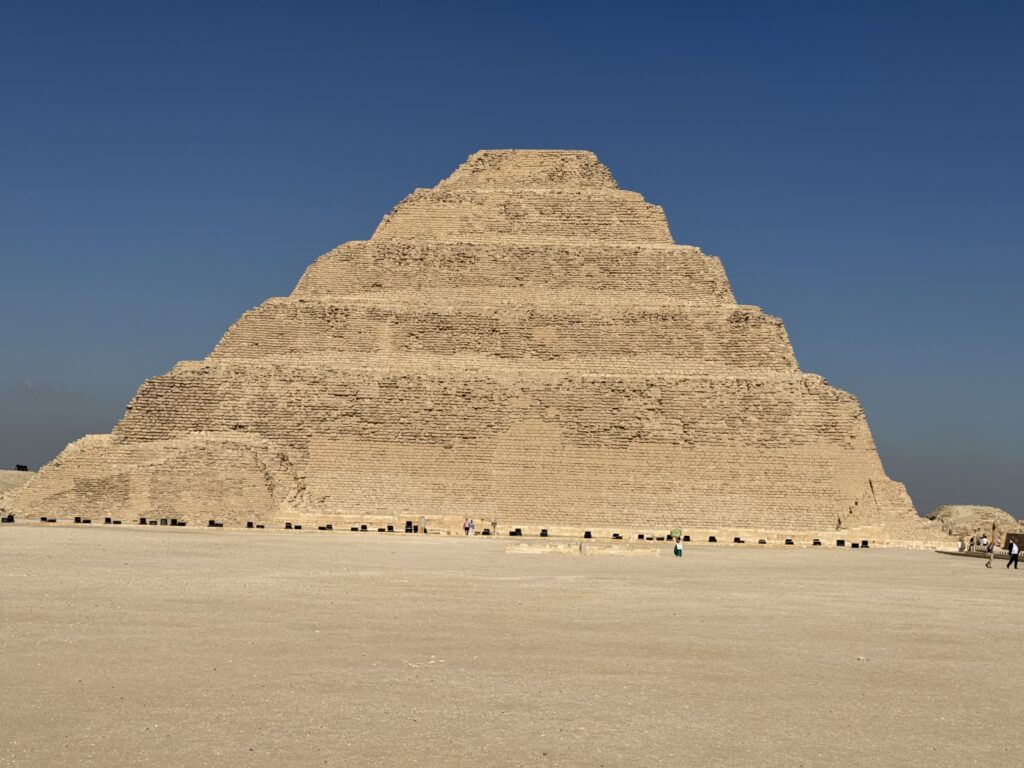
We were bleary during our first day in Cairo — we arrived at the airport just after midnight and got only a few hours sleep before our first tour that morning — but we did get to see our first pyramid about 20 miles south of the city. It’s called the Pyramid of Djoser or the Step Pyramid, a six-tier, 204-foot tall stone structure built in the 27th century BC for the Third Dynasty pharaoh Djoser. Some historians think it’s the first stone edifice ever built by man, though I’m pretty sure The Flintstones house was even older.
Next we visited the nearby Funerary Complex of King Teti, which includes a cluster of pyramids and tombs along with a mortuary temple dedicated to the first ruler of the Sixth Dynasty. To get to the king’s burial chamber, you have to walk down a narrow, low passageway that requires you to bend over like the Hunchback of Notre Dame. For folks like me with chronic back issues, you’ll need a good half-hour to straighten up again after leaving the chamber, whose dark blue ceiling is painted with gold stars symbolizing the night sky.
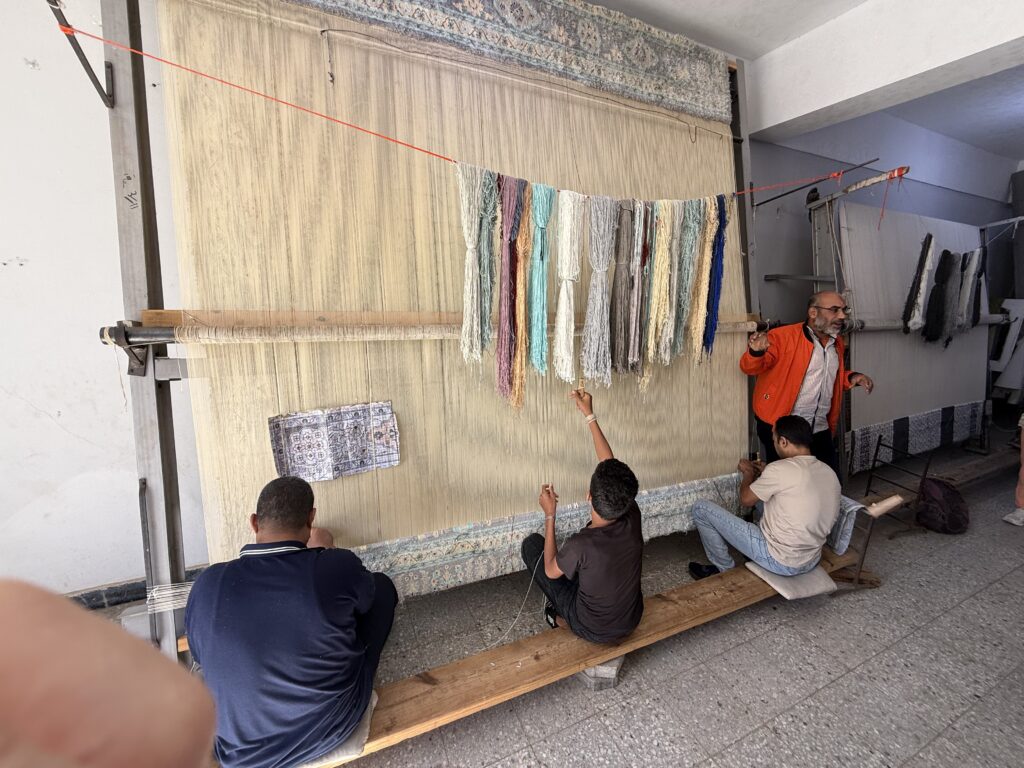
Later we went to a neighborhood filled with carpet stores where craftsmen hand weave carpets made from wool, cotton and silk. At one store we watched in amazement as a 16-year-old boy simultaneously knotted several spools of colored material at lightning speed in what seemed like a magic trick. It can take years to weave an extra-large carpet and the finished products can cost upward of $50,000. (We settled for a small hanging silk carpet for a tiny fraction of that amount.)
Our final stop of the day was the Citadel of Saladin, Egypt’s seat of government for nearly 700 years. Perched on a rocky hilltop, its Ottoman-style domes and towering minarets dominate Cairo’s skyline. Originally built as a medieval fortress, it’s home to three prominent mosques, including one dedicated to Muhammed Ali — not the boxer but the ruler considered the father of modern Egypt for transforming the country’s military, economy and educational system in the first half of the 19th century.
The following day featured an iconic triple-header: The Great Pyramids, the Sphinx and the Grand Egyptian Museum, all located in Giza about 8-10 miles southwest of downtown Cairo.
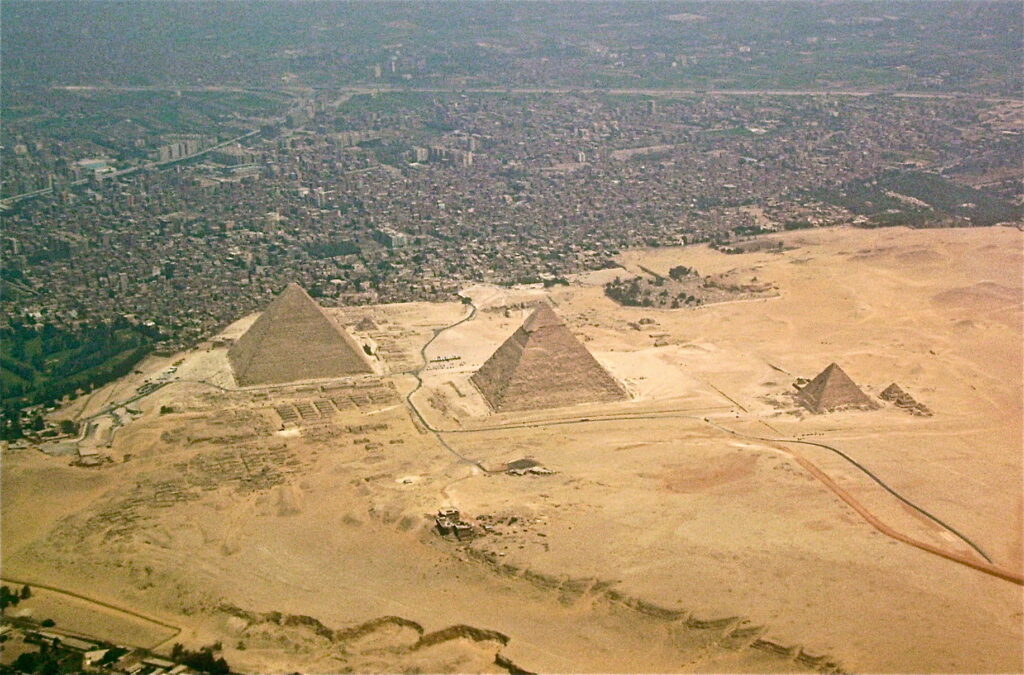
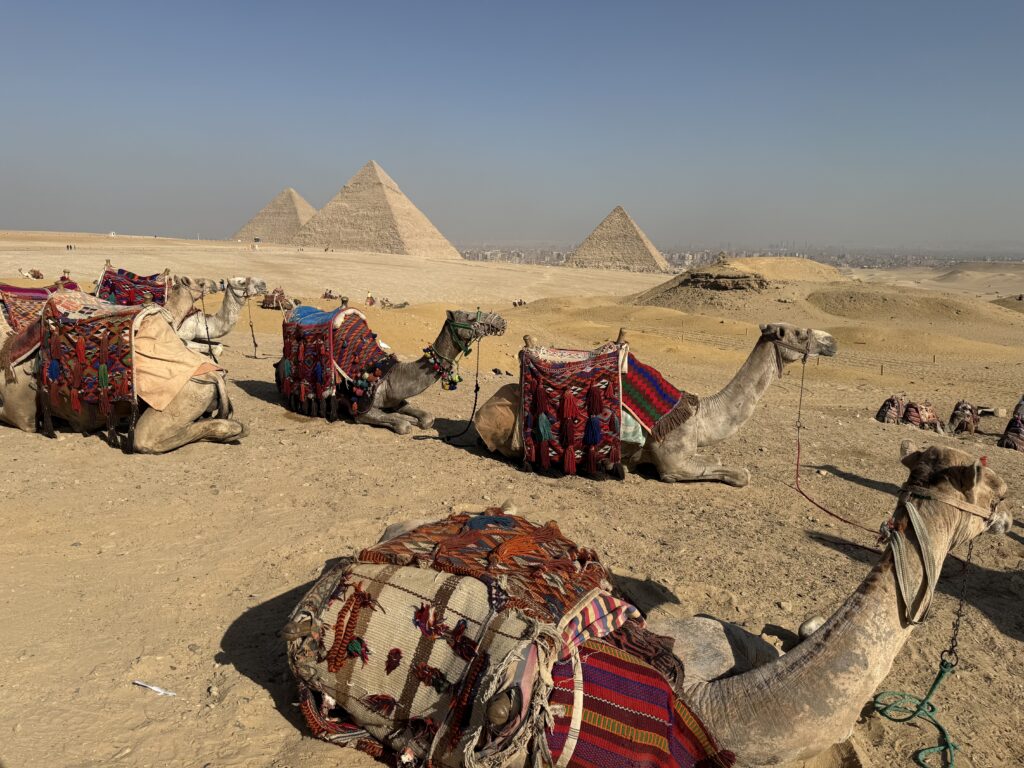
After seeing so many pictures of the pyramids, it’s still truly astounding to see them up close. The largest of the three main pyramids, which contains the tomb of pharaoh Khufu, was originally 481 feet high (due to erosion and the removal of its limestone casing, it’s now only 455 feet) and was the world’s tallest structure for more than 3,800 years. To this day, no one knows for sure how such immense structures were built with primitive tools and technology. No wonder some folks think they were built by aliens.

Another shocking thing about the pyramids is how close they are to modern urban development. The city of Giza, which is part of metro Cairo, borders on the pyramids, which are within walking distance of nearby apartments and businesses. The image many have of the pyramids being in the middle of a remote desert couldn’t be further from the truth.
In fact, the strongest desert atmosphere you get at the Giza pyramids comes from the dozens of camels that are available for tourists to ride. It makes the place feel kind of tacky, but of course I had to pose for the obligatory photo on top of one of the dromedaries, who seem rather bored by their assigned task.
The Sphinx, a mythical creature with a human’s head and a lion’s body, was carved from a single block of limestone more than 4,500 years ago for king Khufu or his son Khafre. The sculpture is 240 feet long and 66 feet high, but its most notable feature is its damaged nose, which most scholars attribute to vandalism, not the popular myth that it was blasted by Napoleon’s cannons during a French invasion of Egypt in 1798. When it comes to mutilated noses, the Sphinx ranks right up there with Jack Nicholson’s sliced schnoz in “Chinatown.’’

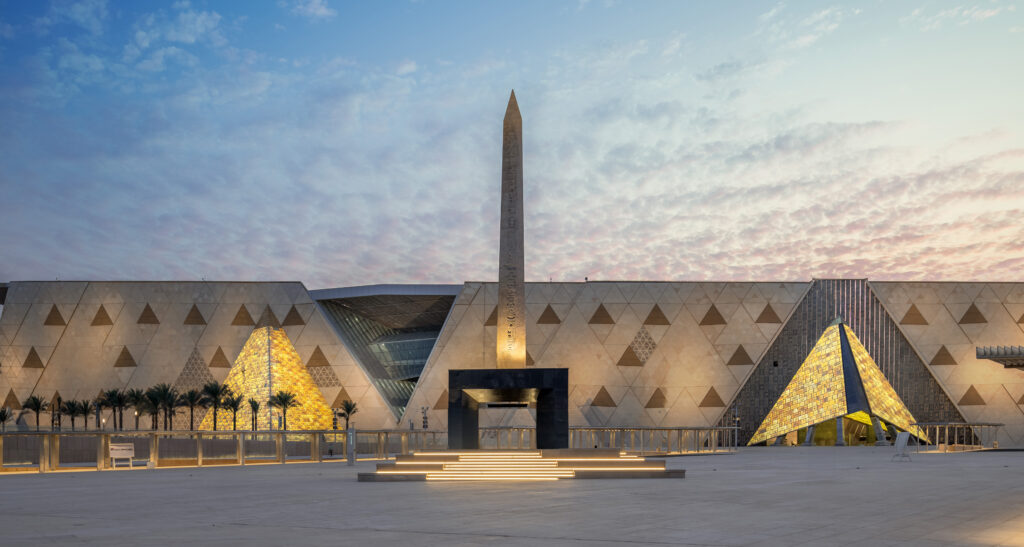
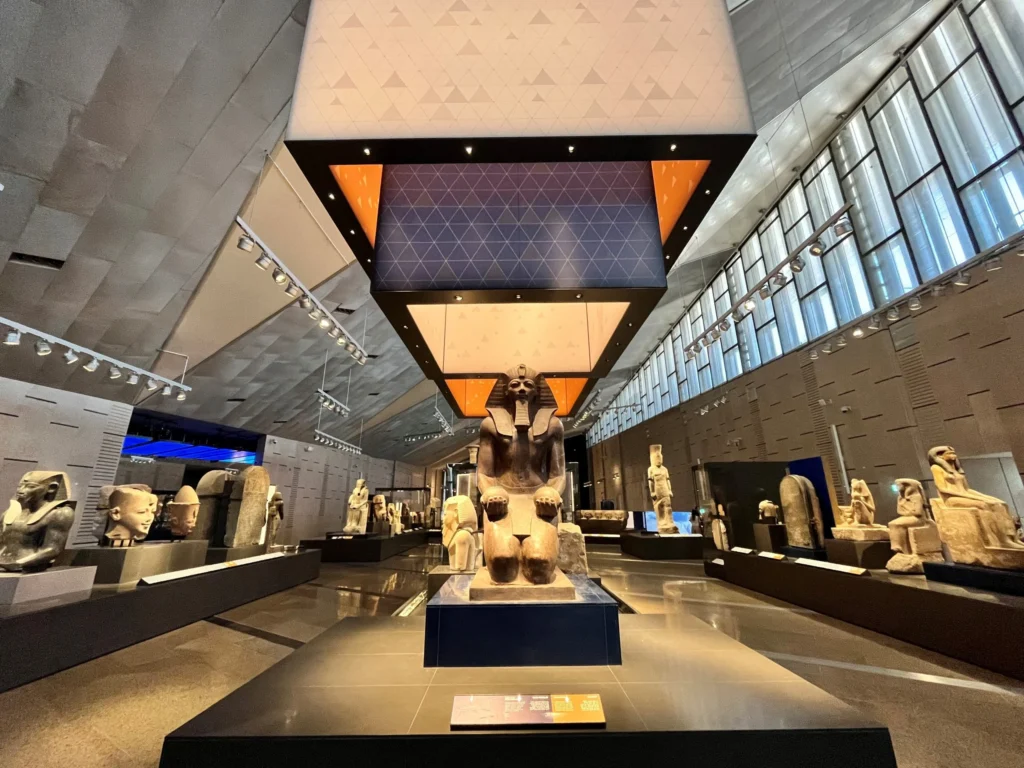
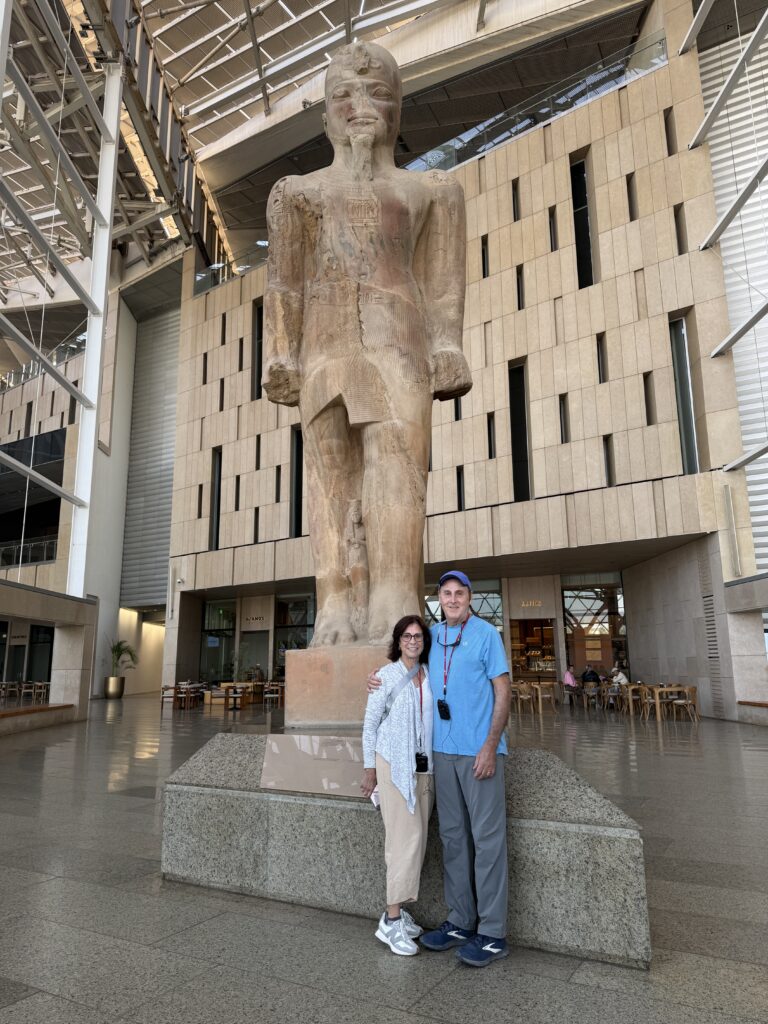
The Grand Egyptian Museum had its official opening just a few weeks before we arrived, so we were very lucky to see it. It took more than 20 years and $1 billion to construct this architectural marvel, whose translucent alabaster facade showcases an array of triangular panels. The massive complex covers 5.4 million square feet, including 258,00 square feet of exhibition space, making it the largest museum in the world dedicated to one civilization.
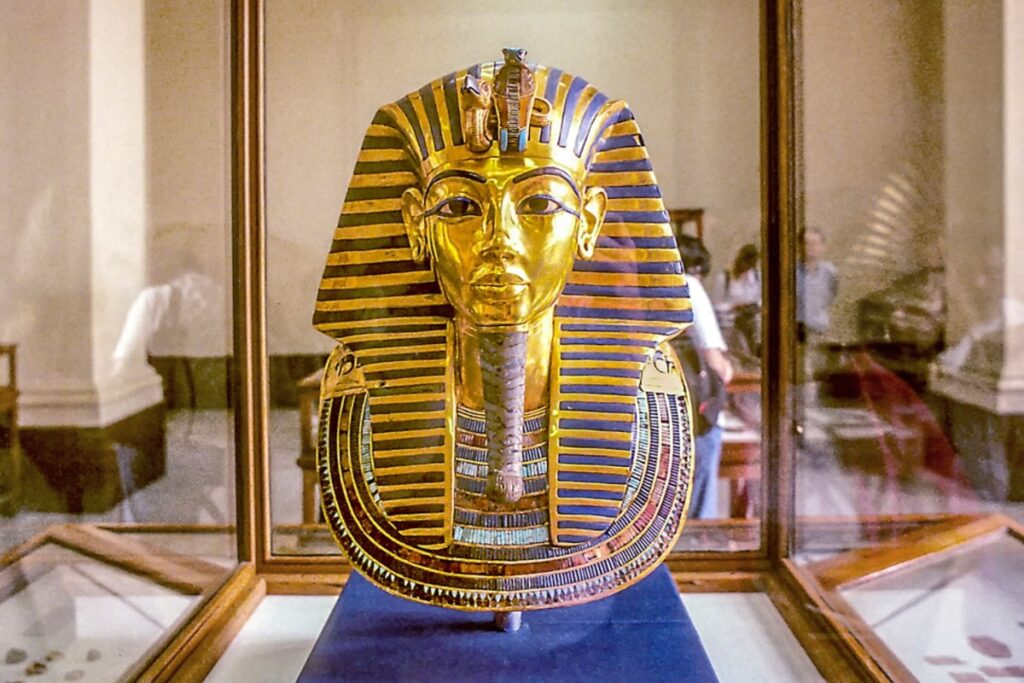
The museum contains more than 100,000 ancient artifacts, 20,000 of which have never been displayed before. The biggest attraction is the complete collection of artifacts found in King Tut’s tomb, including his gold death mask, three nested coffins, iron daggers and gilded chariots, along with jewelry, furniture, board games and even boomerangs. The only thing missing is Tut’s mummy, which remains in the Valley of the Kings because it’s considered too risky to move.

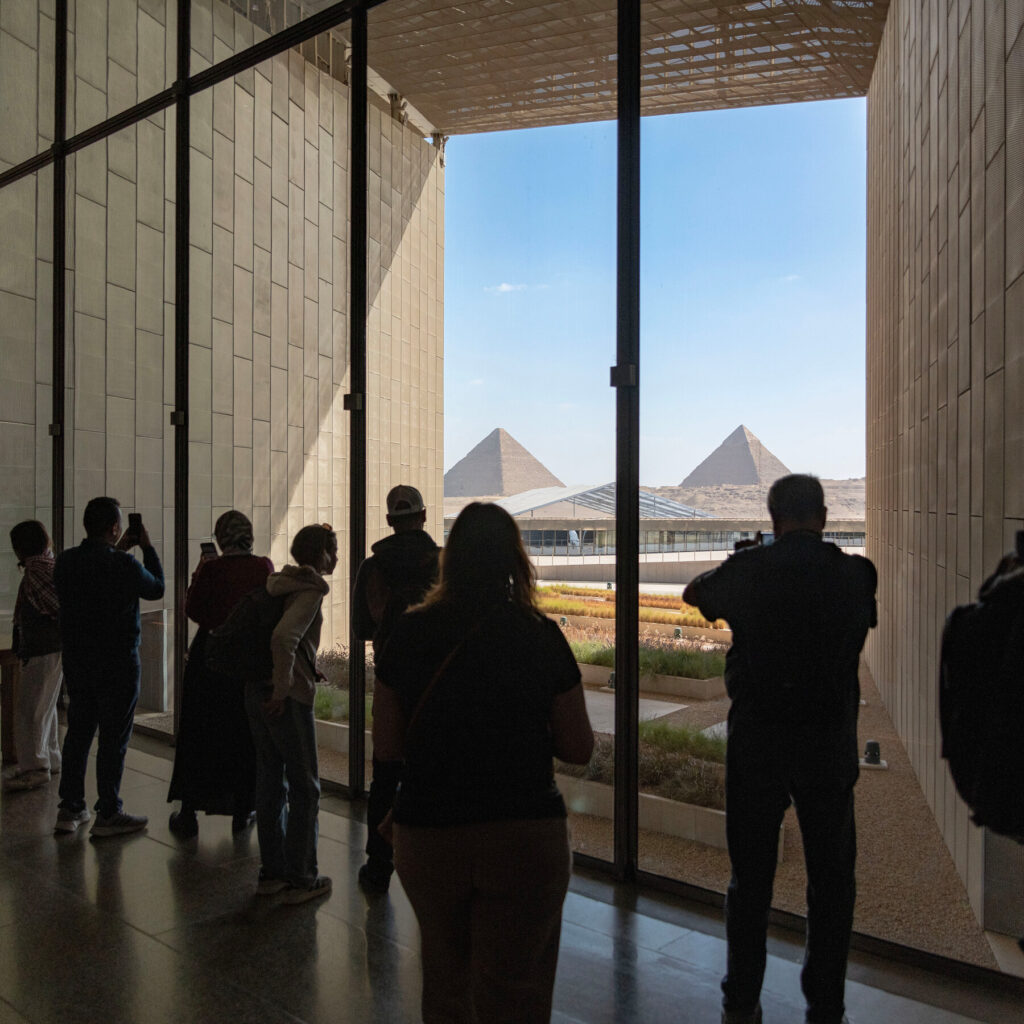
The museum is so close to the pyramids that you can see them clearly through a giant glass window, which was crowded with tourists snapping postcard pictures of the triangular monuments.
We left Cairo the next day and flew south to Luxor, home of two of Egypt’s most famous temples. The Karnak Temple and Luxor Temple are connected by the Avenue of Sphinxes, a 1.7-mile road lined with more than 1,000 of the sandstone statues, some with human heads and others with ram heads.
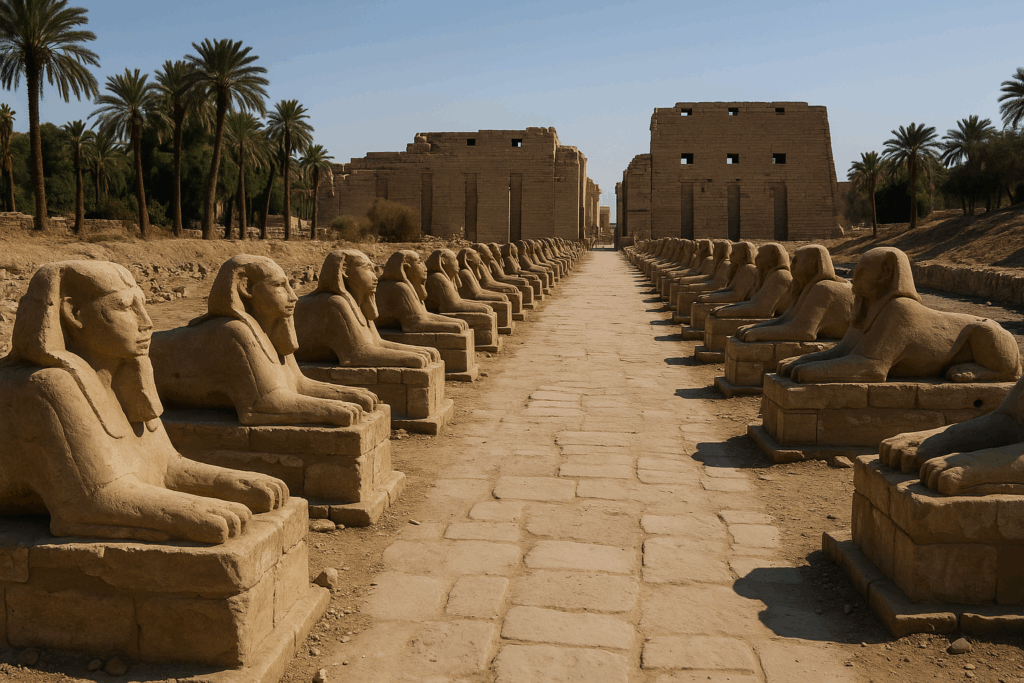
Karnak is a huge complex that includes a Great Hall with 134 treelike columns engraved with hieroglyphics, a Sacred Lake used for purification rituals and a Great Court that once hosted fertility festivals. The entrance to Luxor Temple is fronted by two colossal statues of Ramesses II and an 82-foot high, red granite obelisk. Inside are numerous courts and halls, plus one of the oldest, active mosques in the world. We visited Luxor Temple at night and watched as the soft lighting system transformed the place into what looked like a magical movie set.

Luxor is also where we boarded our 82-passenger Viking ship for our cruise on the Nile, widely considered the longest river in the world at 4,130 miles (though some Brazilian scientists claim the Amazon is a little longer.) We stopped at various places along the river, including the Temple of Esna, the High Dam (often mistakingly referred to as the Aswan Dam), the Old Cataract Hotel, a Nubian home and a papyrus center. Among the highlights:
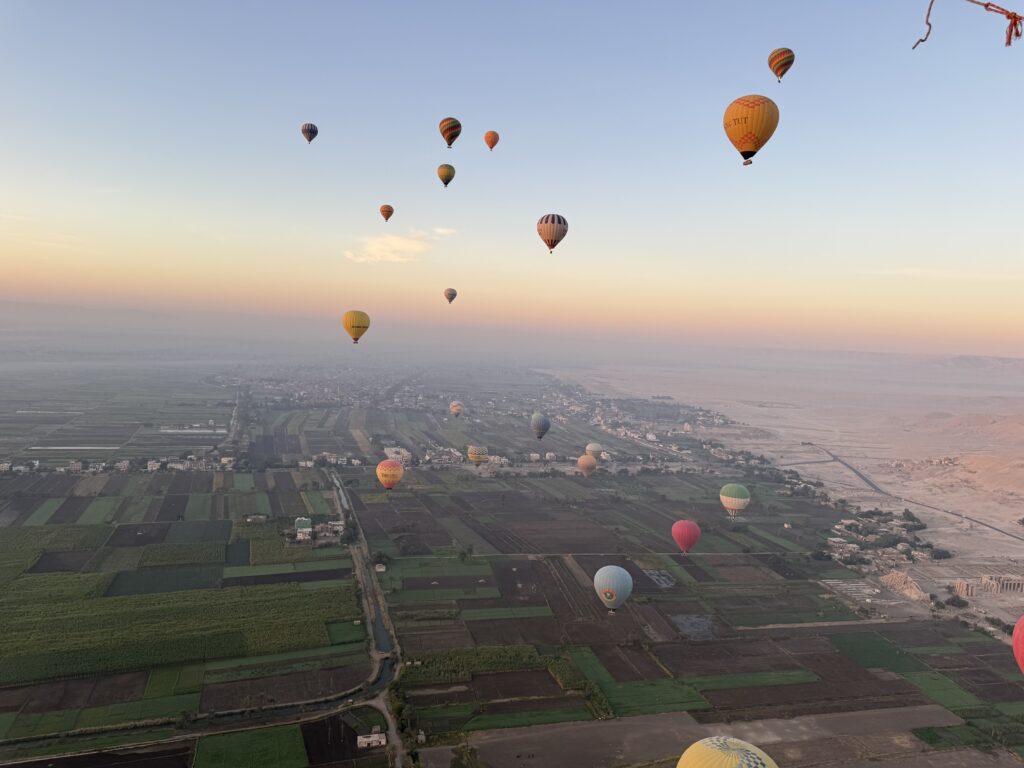
* Hot air balloon ride in Luxor. We took off from a large field on the west bank of the Nile at 4:30 a.m. and soared to 3,000 feet, where we had breathtaking sunrise views of the Valley of the Kings, Hatshepsut’s Temple and the Colossi of Memnon. There were dozens of balloons in the air at the same time, giving it an almost carnival atmosphere. Our balloon held 28 people, grouped in snug four-person compartments that made you intimately familiar with the passenger next to you.
* Valley of the Kings. We visited four tombs there, including King Tut’s. The largest and most impressive was King Seti’s, where the walls are decorated with colorful carvings and paintings depicting the pharaoh’s journey through the underworld. The vaulted ceiling of the burial chamber portrays celestial scenes, with gold stars on a deep blue background. We also saw the mud-brick home that Howard Carter lived in when he was exploring the area in the early 1900s. It had no running water or electricity, so he had plenty of motivation to stay outside and look for tombs.
* Old Cataract Hotel in Aswan. We had high tea on the veranda of this grand British colonial hotel overlooking the Nile where Agatha Christie stayed while writing her 1937 novel “Death on the Nile.” (Personally, I think “high” tea should mean cannibas-spiked Earl Grey instead of mini sweets and sandwiches.) The hotel, built in 1899 by the founder of the Thomas Cook travel agency, shouldn’t be confused with the adjacent New Cataract Hotel, built in 1961 to house Soviet engineers working on the nearby Aswan High Dam.

* Aswan High Dam. Built between 1960 and 1970, at the time it was the largest earthen dam in the world. It’s wrong to just call it the Aswan Dam because that’s the original name of what’s now known as the Low Dam, the first one built across the Nile that was completed in 1902. Yes, it’s confusing. Interesting side note: The building of the High Dam created Lake Nasser, trapping thousands of crocodiles on the south side of the dam. “I wouldn’t go swimming there,” our guide said.
* Nubian Home. We visited a large house where three Nubian families live that now doubles as a tourist site. There’s a small market inside where you can buy various homemade trinkets and get a henna tattoo. (Pat chose a lotus flower on her forearm.) Nubians, by the way, are an indigenous people of the Nile Valley that inhabit southern Egypt and northern Sudan. They have their own culture and language, and have darker skin than Egyptians. Many were forced to relocate when they built the High Dam, which flooded their ancestral land.

* Papyrus Center. We got a short lesson on how to make papyrus, a thick paper-like material used for writing in ancient Egypt. First, you slice the inner pith of the papyrus plant into thin strips and soak them in water for several days. Then you arrange the strips in a crisscross pattern and press them under heavy weight for about a week until they dry. Finally, you rub the surface smooth. After the tutorial, of course, comes the sales pitch to buy some of the papyrus artwork hanging on the wall. So, being canine lovers, we bought a small picture of Anubis, the ancient god of the afterlife portrayed as a black, pointy-eared dog, lying on a sarcophagus.


Other stops on the river cruise included a spice market, more ancient temples and a botanical garden on one of the many islands in the middle of the Nile. We also rode on a Felucca, a traditional wooden sailboat that was used for transporting goods in ancient times.

During our time on the ship, we enjoyed lectures on hieroglyphics (which were only understood after the discovery of the Rosetta Stone in 1799), the role of Egyptian women, how to make falafels and ancient Egyptian medicine, which included early versions of brain surgery, dentistry and birth control.
Viking draws an older crowd, so most people on the ship were senior citizens like us. However, there was one middle-aged couple traveling with two young female friends, one of whom was blind. Amazingly, the blind woman went on every tour, navigating steep steps and rocky terrain that weren’t exactly handicap friendly.
We had gorgeous weather on our trip; every day was sunny with low humidity and temperatures between 75 and 85 degrees. But beware of visiting Egypt in the summer, when temperatures in Aswan (known as the “oven of Egypt’’) can soar above 120 degrees.
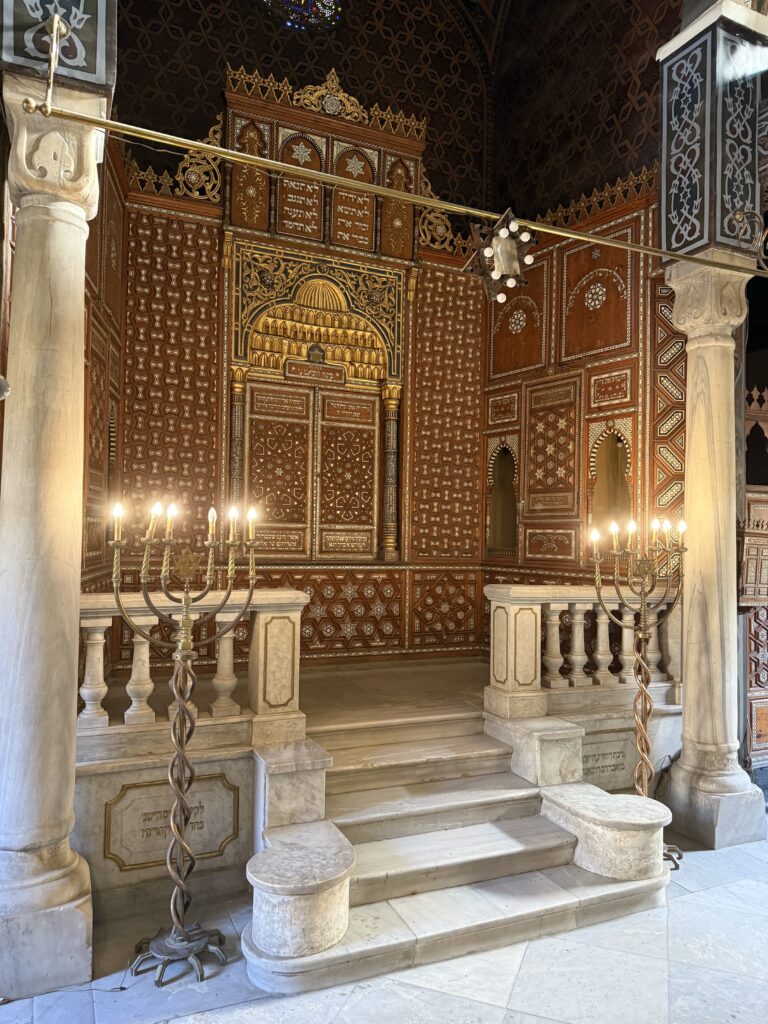
After flying back to Cairo, I toured the city’s historic Christian district, also known as the Coptic Quarter. Interestingly, it’s also the site of Ben Ezra Synagogue, Cairo’s oldest Jewish house of worship, which dates back to the ninth century. It’s no longer active because Egypt, which had an estimated 80,000 Jews in 1948, now has fewer than 10 because of emigration, discrimination and conflict with Israel.
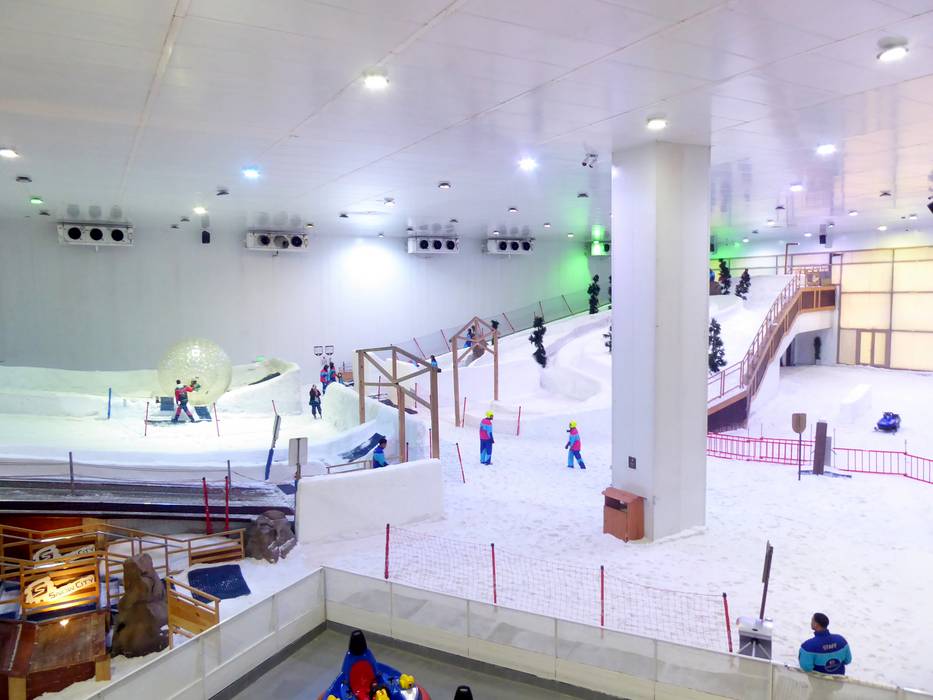
On our final night in Egypt, we walked through an eight-story, luxury mega-mall connected to our hotel near the Cairo airport. On the top floor was “Snow City,’’ a climate-controlled, winter theme park covered with snow made out of drinking water. We watched kids dressed in ski outfits tobogganing and tubing down a snowy hill as if they were in Vermont. Wonder what King Tut would think of that.




As always Rick, you’ve shared a very impressive and interesting trip and given us some education too. Many thanks from Diana
Hi Rick,
I always love to read about your travels!!! Your trips provide education, novel ways of experiencing what you are seeing and a level of entertainment that is not to be missed.
Elissa